Lawn Care: Tips & Guides
Lawn Edging vs. Lawn Trimming: What’s the Difference?
By Trimming Edge
What is Lawn Trimming?
Lawn trimming refers to cutting grass in areas a standard mower cannot easily reach, such as around trees, fences, garden beds, and the bases of structures. It is typically done with a handheld string trimmer, sometimes called a weed whacker that lets you follow tight, irregular lines a mower simply cannot access.
Trimming maintains consistent grass height, preventing tufts around obstacles after mowing. Without it, even a freshly cut lawn can look unfinished in the areas a mower skips over.
Since string trimmers are handheld and maneuverable, they can follow curves, slopes, and narrow gaps that would be difficult or impossible for a mower to navigate safely.
Where Trimming Typically Happens
Trimming usually focuses on the transition zones between open lawn and fixed objects. Common areas include:
- Around trees, mailboxes, and light posts
- Along fence lines and property borders
- Near garden beds, retaining walls, and outdoor structures
- Tight corners and slopes a mower cannot safely reach
What is Lawn Edging?
Lawn edging is a different task altogether. Rather than cutting grass height, edging creates a clean, defined line between the lawn and hard surfaces like driveways, sidewalks, and patios, or between grass and garden beds. It essentially separates one surface from another with a crisp, visible boundary.
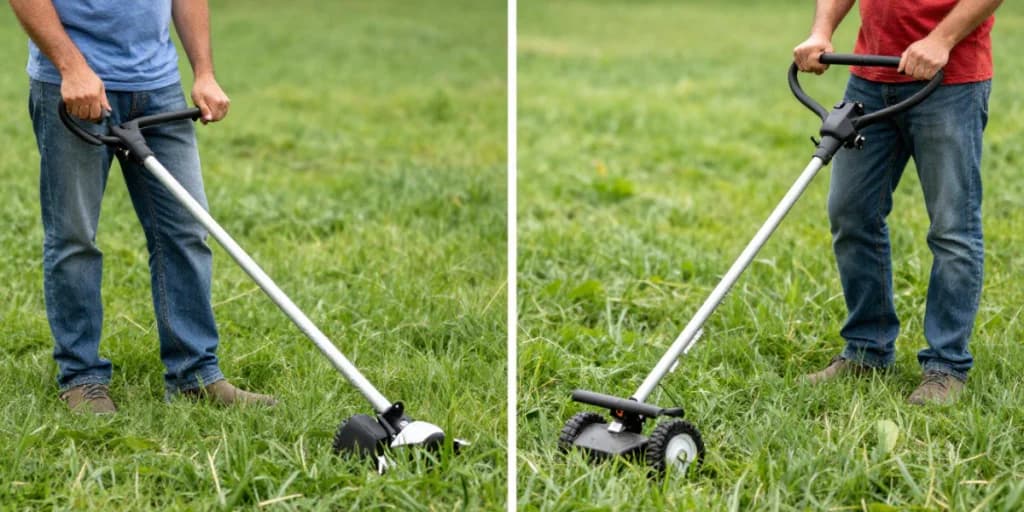
Edging is usually done with a dedicated edging tool or an edger attachment, which cuts a shallow groove or trench along the border rather than simply trimming blade height. The result is a line that prevents grass from creeping onto pavement or into flower beds.
This groove also acts as a visual and physical barrier, making it easier to keep grass contained within its intended boundary between mowing sessions.
Where Edging Typically Happens
Edging is generally applied along fixed borders rather than around scattered obstacles. Typical spots include:
- Where the lawn meets a driveway or sidewalk
- Along the edges of garden beds and mulch areas.
- The perimeter of patios, walkways, and paved paths
- Property lines where grass meets a different surface
Lawn Edging vs Lawn Trimming: Key Differences
Once you look at the two side by side, the distinction becomes much clearer. Trimming is about matching grass height in hard-to-reach areas, while edging is about creating a sharp visual boundary between surfaces. Here’s a quick comparison of the two:
| Aspect | Lawn Trimming | Lawn Edging |
| Main Purpose | Matches grass height in tight spots | Creates a defined border between surfaces |
| Typical Tool | String trimmer | Blade-style edger |
| Common Areas | Trees, fences, garden beds, corners | Driveways, sidewalks, patios, bed borders |
| Frequency | Close to every mowing session | Less often, as needed |
| Visual Result | Blends in with the rest of the lawn | Creates a crisp, visible line |
Tools and Technique
Trimming relies on a string trimmer moving through grass at roughly mower height, following the natural contours of obstacles. Edging uses a blade-style edger or an edging attachment to cut a straight, defined line, often along a hard surface rather than around an object.
Purpose and Visual Impact
Trimming fills in the gaps a mower leaves behind, so the whole lawn reads as one consistent height. Edging, on the other hand, adds a layer of definition and structure that makes the entire property look deliberately maintained rather than simply mowed.
Time and Maintenance Effort
Trimming is quicker and more frequent, integrated into regular mowing, while edging needs more setup and precision for straight, even lines. Neither task takes the place of the other, and treating them as interchangeable is one of the most common ways a lawn ends up looking only half finished.
Why Both Matter for a Polished Lawn
Skipping either task leaves a lawn looking incomplete, even if the mowing itself was done well. Understanding the difference between lawn edging and lawn trimming, and applying both consistently, is what separates an average-looking yard from one that truly stands out.
Aesthetic Benefits
Trimmed corners and edged borders frame the entire property, drawing attention to the clean lines rather than uneven patches or blurred boundaries between grass and hardscaping. A yard with sharp edges and tidy corners tends to read as well-cared-for, even between full mowing sessions.
Health and Maintenance Benefits
Beyond appearance, edging helps prevent grass from spreading into beds or over pavement, which reduces long-term maintenance. Regular trimming, meanwhile, prevents overgrown patches near obstacles from becoming havens for pests or weeds that can eventually spread into the rest of the lawn.
Homeowners who want consistently clean results without tracking every corner of the yard themselves often turn to us, a dependable lawn care company in Westfield, which handles both trimming and edging as part of a coordinated maintenance routine.
When Should You Edge and Trim Your Lawn?
Timing matters just as much as technique when it comes to getting a clean, professional-looking result.
Before or After Mowing
Many landscaping professionals recommend edging before mowing, since it can dislodge debris that clippings will later help clean up. Trimming is often done after mowing to match the height of the cut lawn.
Following this order also means the mower can pass over any loosened grass or soil from the edging process, leaving the entire yard looking clean and consistent by the time the work is finished.
How Often Each Task Is Needed
Edging does not need to happen as frequently as trimming, since borders tend to grow more slowly than grass blades. Trimming, however, often needs to keep pace with regular mowing to avoid an inconsistent, patchy appearance.
Common Edging and Trimming Differences Homeowners Should Know
A few practical distinctions can help clear up ongoing confusion between these two tasks.
- Trimming adjusts grass height in tight or awkward spots, while edging defines a border between surfaces
- Trimming uses a string trimmer, while edging typically requires a blade-style edger
- Trimming happens closer to mowing frequency, while edging can be done less often
- Trimming blends into the rest of the lawn, while edging creates a visible, intentional line
Mixing up these tasks, or skipping one entirely, is one of the most common edging and trimming differences that catches new homeowners off guard.
Mistakes to Avoid
A tidy lawn can quickly lose its polish from a few avoidable habits:
- Assuming mowing alone accounts for edges and corners
- Using a string trimmer to attempt sharp, defined borders
- Letting edges grow out for long stretches before addressing them
- Trimming too close to tree bark or structures, which can cause damage
Tips for Maintaining Clean Edges and Trimmed Areas in Western Massachusetts
Seasonal growth patterns across this region mean both tasks tend to need more frequent attention in spring and fall, when grass grows fastest, and less during the slower growth of summer heat or the dormant winter months.
Seasonal Considerations
Grass along driveways and walkways tends to spread fastest during periods of steady rainfall, so edging may need to happen more often during wetter stretches of the year. Trimming around trees and beds should follow a similar rhythm, staying consistent with the overall mowing schedule.
Cooler months bring a natural slowdown in growth, which means both tasks can typically be spaced further apart without the yard losing its clean appearance.
Keeping a Consistent Routine
Setting a general routine, rather than tackling edges and trim spots only when they become noticeably overgrown, keeps a property looking consistently sharp throughout the growing season.
FAQs
1. Is lawn edging the same thing as lawn trimming?
No. Edging creates a defined border between grass and a hard surface or garden bed, while trimming cuts grass height in spots a mower cannot reach.
2. Should edging be done before or after mowing?
Edging is commonly done before mowing so any loosened debris can be cleaned up as part of the mowing pass, though some routines vary based on the property.
3. Does every lawn need edging, or is trimming enough on its own?
Both serve different purposes, so relying on trimming alone typically leaves borders along driveways, walkways, and beds looking undefined and blurred over time.
4. How often should edging be done compared to trimming?
Trimming generally needs to happen close to every mowing session, while edging can often be spaced out further since borders tend to grow more slowly.
5. Can the wrong tool be used for either task?
Yes. Using a string trimmer to attempt a sharp, defined border rarely produces the same clean line as a dedicated edging tool, and the two are not fully interchangeable.
Final Thoughts
Trimming and edging may seem like small details compared to mowing, but together they are what give a lawn its finished, well-maintained appearance. Trimming fills in the areas a mower cannot reach, while edging creates the clean, defined lines that separate lawn from driveway, walkway, or garden bed. Keeping both on a consistent schedule throughout the year makes a noticeable difference in how a property looks from the curb, often the difference between a yard that looks simply mowed and one that looks genuinely maintained.
Pairing this routine with professional mulching services from us can further enhance the look, giving garden beds and borders the same clean, cared-for appearance as the rest of the lawn. A little attention to these finishing touches goes a long way toward a yard that looks genuinely well cared for, season after season.
Keep Reading
More from the Blog