Lawn & Landscaping Services
Storm-Damaged Tree Branches: What to Do First and Who to Call in Western MA
October 27, 2026
Read More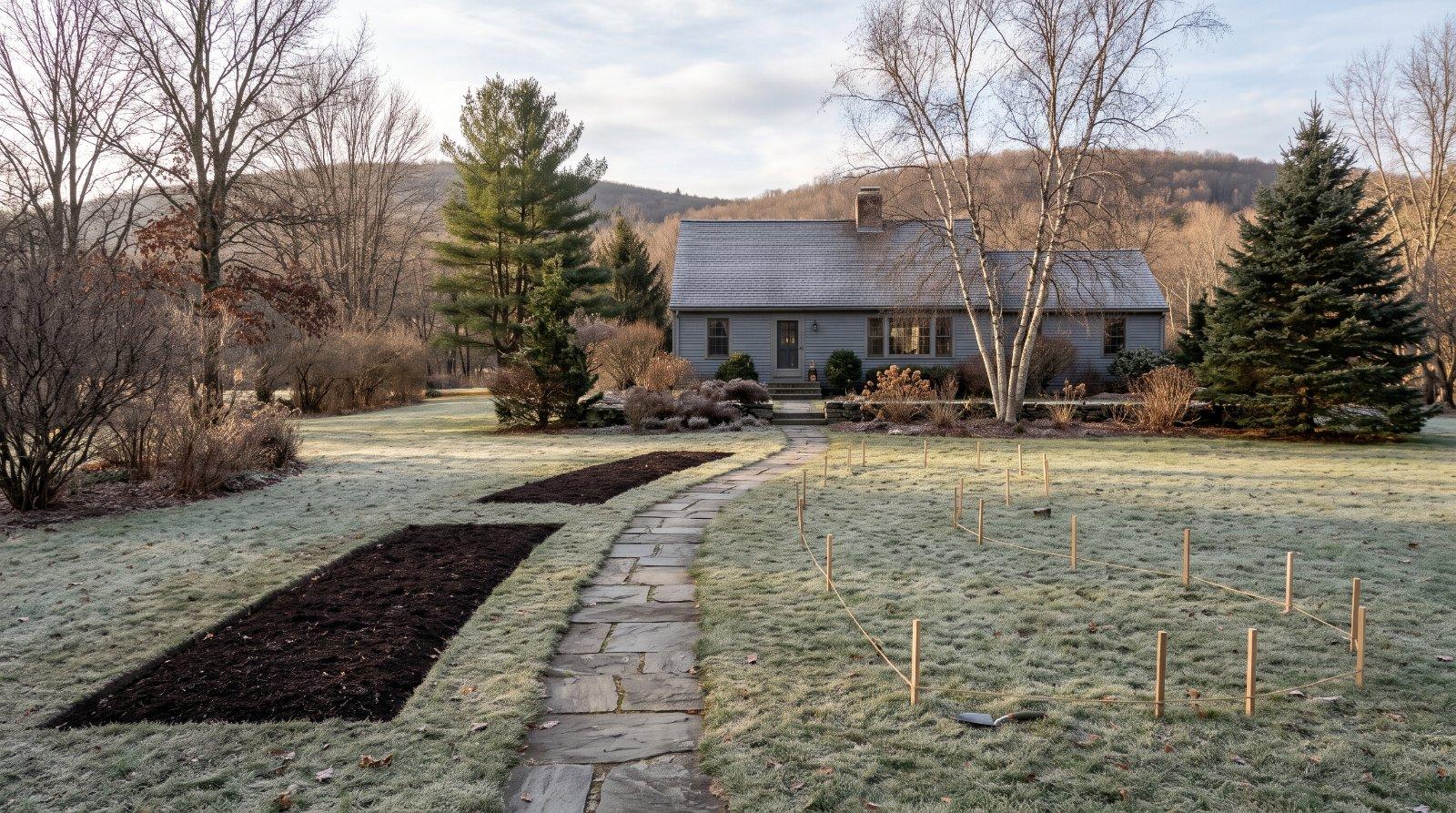
By Trimming Edge
By late November the growing season is over in Westfield, Huntington, Montgomery and Russell. The leaves are down, the beds are cut back, and most homeowners put the yard out of their minds until the snow melts. That makes winter the easiest time of year to plan a landscape design project, because you can see your property clearly and still have months to think before any digging starts.
If you have been meaning to redo the front beds, add a path to the back door, or finally fix the corner of the yard where nothing grows, here is how to use the off-season to get ready.
With the leaves gone, the structure of your property is easy to read. You can see where water sits after a thaw, which slopes wash out, how far the shade from your trees really reaches, and which shrubs have outgrown their spot.
A rushed spring project often ends up as a quick row of shrubs in a strip of mulch. Planning in winter gives you time to decide what you actually want from the space: a quiet spot to sit, a cleaner look from the street, less mowing, a place for the dog, or beds that are easier to keep up.
Once the soil thaws and dries out in spring, planting and bed work can start. If your plan, budget and plant list are already settled, the work can begin as soon as conditions allow instead of waiting while the details get sorted out.
Before you sketch anything, walk the yard on a clear day and take notes. A few things to look for:
Wet and icy spots. Where does snowmelt pool or freeze? Those areas need plants that tolerate wet feet, or better grading, before anything else.
Sun and shade. Notice where the low winter sun reaches and where buildings and trees block it. Summer shade will be heavier once the trees leaf out.
Winter damage. Look for shrubs split by heavy snow, plants browned by wind, and edges along the driveway hurt by plows or salt.
Views. Stand at your windows and front door. What do you see from inside the house in January? That view matters just as much as the one from the street.
Paths people really use. Worn tracks in the lawn show where a walkway or stepping stones would make sense.
Take photos as you go. They help when you compare ideas later.
Good landscape design starts with how you use the yard, not with a plant list. Ask yourself a few plain questions:
Do you want to spend more time outside, or less time maintaining the yard?
Is curb appeal the main goal, or privacy, or a play space for kids and pets?
Are there problem areas you want solved, such as erosion, bare ground under trees, or a steep bank that is hard to mow?
How much upkeep are you willing to do each week in summer?
Write your answers down and rank them. A clear top priority makes every later decision easier, from bed shapes to plant choices.
Our area has cold winters, heavy wet snow, spring thaws and humid summers. The hill towns around Huntington, Montgomery and Russell tend to run colder and get more snow than the valley around Westfield. A design that works here keeps that in mind.
Plants native to Western Massachusetts, and other plants suited to our climate, usually establish faster and need less help once they settle in. Match each plant to its spot: sun-loving plants in the open, shade-tolerant ones under trees, and moisture-tolerant plants where water collects. A mix of evergreens, flowering shrubs and perennials keeps the yard interesting in every season, including winter.
Many overgrown foundation plantings started out as small shrubs planted too close to the house. When you plan, look up the mature size of each plant and give it space. It may look sparse the first year, but it saves years of hard pruning. Our tree and shrub care page explains how we keep established plantings healthy.
Plan where the snow will go. Keep delicate shrubs away from the spots where you pile snow from the driveway or where it slides off the roof. Use sturdy plants near walkways and plow lines, and consider stone or mulch borders where salt spray is a problem.
Paths, edging and beds give a design its shape. Winter is a good time to decide on:
Pathways. Stone pathways connect the driveway, doors and garden areas and cut down on muddy tracks across the lawn.
Bed lines. Smooth, deliberate curves or clean straight edges both work. What matters is that the edge is easy to mow along and to keep crisp.
Mulch and edging. A fresh layer of mulch and a clean edge make new plantings look finished and help hold moisture in summer. Our mulching and bed maintenance service covers that work once the beds are in.
Seasonal color. Decide where you want spring and summer color so it shows from the places you look most.
A full yard makeover does not have to happen in one season. Many homeowners split a project into phases: fix drainage and add the main path this year, plant the front beds next year, and finish the backyard after that. Phasing spreads out the cost and lets you see how the first part settles in before you commit to the next.
Sharing a clear budget with your designer helps shape a plan you can actually build.
At Trimming Edge, every landscape project starts with a free consultation. We visit your property, talk through your goals, style and budget, and then put together a custom plan for your yard and our Western MA climate. Once you are happy with the plan, our crew handles the installation, from planting trees and shrubs to building beds and stone pathways, and we finish with a walkthrough to make sure everything is right.
Winter is a good time to have that first conversation. You can share the notes and photos from your winter walk, and we can talk through ideas while there is plenty of time before the spring season gets busy. You can read more about how we work on our landscape design and installation page.
Business owners and property managers in Westfield and the surrounding towns benefit from winter planning as well. An entrance refresh, new plantings along a parking area, or cleaner beds around signage are easier to schedule when the plan is set before spring.
A little planning this winter can turn next year's yard work into a project you are proud of. Walk the property, write down what you want, and think about how the yard handles our winters. When you are ready to turn those ideas into a plan, Trimming Edge is here to help homeowners and businesses in Westfield, Huntington, Montgomery and Russell.
Call us at (413) 551-9653 or contact us to schedule your free landscape design consultation and estimate.
October 27, 2026
Read More
September 22, 2026
Read More