Lawn Care: Tips & Guides
How to Protect Shrubs From Winter Damage in Western MA
November 10, 2026
Read More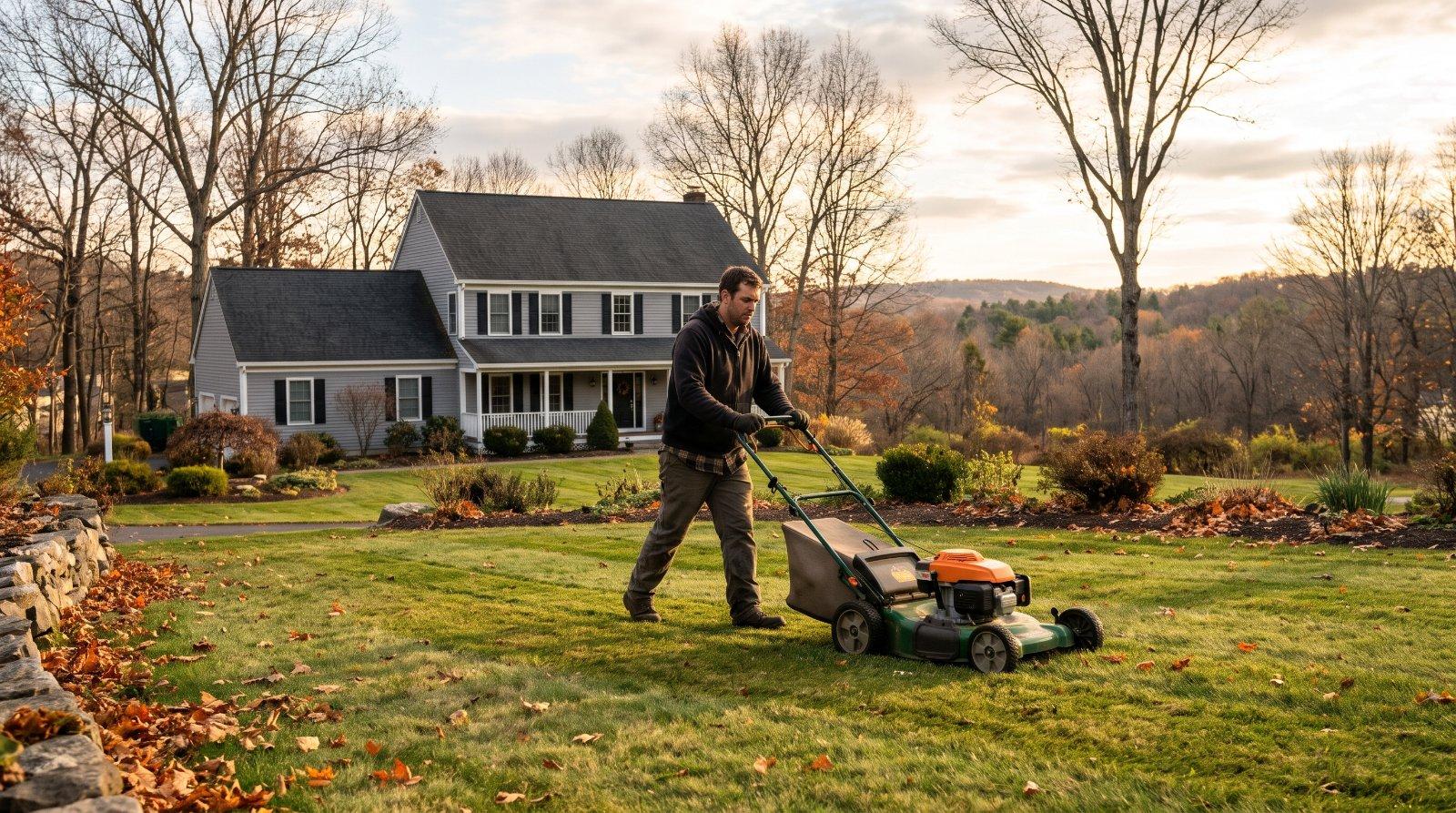
By Trimming Edge
By the middle of November, most lawns in Westfield, Huntington, Montgomery and Russell have nearly stopped growing. The leaves are mostly down, frost shows up most mornings, and homeowners start asking the same question: how short should the grass be before the snow comes?
It's a fair question, because the last mow of the season has a real effect on how your lawn looks in April. Cut it too long and the grass can mat down under snow. Scalp it and you weaken the roots right before the hardest months of the year. Here's how we think about the final cut for lawns in Western Massachusetts.
Most lawns in our area are cool-season grasses: Kentucky bluegrass, perennial ryegrass and fine or tall fescue, often mixed together. For these grasses, a final height of roughly 2 to 2.5 inches works well going into winter.
That's a little shorter than the 3 to 3.5 inches many lawns are kept at in summer, but it's not a buzz cut. If you already mow at around 2 inches all season, there's no need to go lower for the last mow. The goal is a lawn that is tidy and upright, not long enough to flop over and not so short that you can see soil.
Winter in the Western Massachusetts hill towns can mean weeks of snow cover, thaws, refreezes and more snow. The height of your grass when that first real snowfall arrives makes a difference in a few ways.
When tall grass is pressed flat under heavy, wet snow, the blades fold over and stay damp for weeks. That cold, wet, airless layer is exactly where snow mold grows. In spring it shows up as circular patches of gray or pinkish matted grass, usually where snow sat longest, such as along driveways and the north side of the house.
Voles like to travel under the snow through long, matted grass. When the snow melts, you may find winding runways chewed across the lawn. A shorter final cut leaves them less cover.
On the other end, cutting too short removes the leaf blade the plant needs to store energy for winter. A scalped lawn is more likely to thin out, dry out on windy days, and let weeds take over bare spots in spring.
A good rule for mowing any time of year is never to remove more than about one-third of the blade in a single cut. That rule matters even more in late fall, when the grass is slowing down and has less energy to recover.
Instead of dropping the deck from 3.5 inches to 2 inches in one pass, step it down over the last few mows of the season:
A gradual step-down gives the grass time to adjust and avoids the yellow, stressed look that comes from a sudden hard cut. If you want to understand more about cutting schedules during the main season, our post on how often you should mow your lawn covers the basics.
There isn't a single date. Grass keeps growing slowly as long as the soil stays fairly mild, and that varies from a sunny yard in Westfield to a shaded lot up in the hills of Huntington or Montgomery.
A simple test works well: if a week goes by and the lawn doesn't look any longer, growth has basically stopped and you can do the final mow. In most years around here that happens sometime in November, around the time the first hard frosts arrive.
A few things to keep in mind when you pick the day:
Leaves left on the lawn over winter do the same damage as long grass: they trap moisture, block light and create a perfect home for snow mold. Before your final mow, make sure the lawn is mostly clear.
A light layer of leaves can be mulched into the lawn with the mower. A thick layer should be raked or blown off and removed. If the job is bigger than a weekend, our seasonal cleanup service takes care of leaf removal, bed cleanup and the last cut in one visit.
The final mow is one piece of getting your yard ready for winter. A few other small steps help the lawn come back strong in spring:
For businesses, the last mow is about more than lawn health. A neat, evenly cut property looks cared for through the winter, and clearing leaves and debris before the snow helps keep walkways and parking edges clean. Matted grass and snow mold patches along entrances are also the first thing customers notice when spring arrives.
If you manage an office, retail space or multi-unit property in Westfield or the surrounding towns, our commercial landscaping team can fit the final cut and fall cleanup into your regular maintenance schedule.
Trimming Edge is a locally owned, family-operated lawn care and landscaping company in Westfield, MA. Our crews adjust cutting height by season and grass type on every property we mow, and we know how lawns in Westfield, Huntington, Montgomery and Russell behave as winter sets in.
If you'd rather not guess about mowing heights and timing this year, we can take the last mows of the season off your list as part of our lawn mowing and maintenance service. Call us at (413) 551-9653 or request a free estimate online, and we'll help your lawn head into winter in the right shape for a green spring.
November 10, 2026
Read More