

Lawn Care: Tips & Guides
How to Protect Shrubs From Winter Damage in Western MA
By Trimming Edge
Every spring we see the same thing across Westfield, Huntington, Montgomery and Russell: arborvitae split open down the middle, boxwoods with brown, scorched tips, and foundation shrubs along the driveway that look half dead. Most of that damage happened months earlier, during the winter, and much of it could have been prevented with a little work in November.
If you want to know how to protect shrubs from winter damage here in Western Massachusetts, the good news is that it doesn't take much.
Why Winter Is Hard on Shrubs in Western MA
Our hill towns get a real New England winter. Temperatures swing from mild afternoons to sub-zero nights, wet snow piles up fast, and roads and driveways get treated with salt for months. Shrubs face four main threats:
- Winter burn. Evergreens like boxwood, rhododendron, holly and arborvitae keep losing moisture through their leaves and needles all winter. When the ground is frozen, the roots can't replace it, so foliage dries out and turns brown, especially on the side facing wind or afternoon sun.
- Snow and ice load. Heavy, wet snow and ice storms bend and split upright shrubs. Tall arborvitae are the classic victims, and so are shrubs under a roofline where snow slides off.
- Salt damage. Salt spray from plows and salty meltwater from the driveway soak into beds near the road. The damage often doesn't show until spring.
- Freeze and thaw. Repeated freezing and thawing can heave shallow roots, particularly on shrubs planted in the last year or two.
Step 1: Water Deeply Before the Ground Freezes
Hydration is the simplest protection against winter burn. Shrubs that go into winter well watered handle drying winds much better than stressed ones.
If the fall has been dry, give evergreens a slow, deep soak every week or two until the soil starts to freeze, usually by late November or early December in our area. Focus on:
- Shrubs planted this year or last year
- Evergreens on the south or west side of the house
- Plants under roof overhangs, where rain rarely reaches
A slow trickle at the base for 20 to 30 minutes beats a quick spray over the top.
Step 2: Mulch the Root Zone
A fresh layer of mulch acts like a blanket for the roots. It evens out soil temperature, holds in moisture and reduces frost heaving.
Spread 2 to 3 inches of shredded bark mulch over the root zone, out toward the edge of the branches. Keep it pulled back a few inches from the trunk or stems so it doesn't trap moisture against the bark and invite rot or rodents.
If your beds are thin or bare heading into winter, our mulching and bed maintenance service can refresh them at the right depth.
Step 3: Shield Evergreens From Wind and Sun
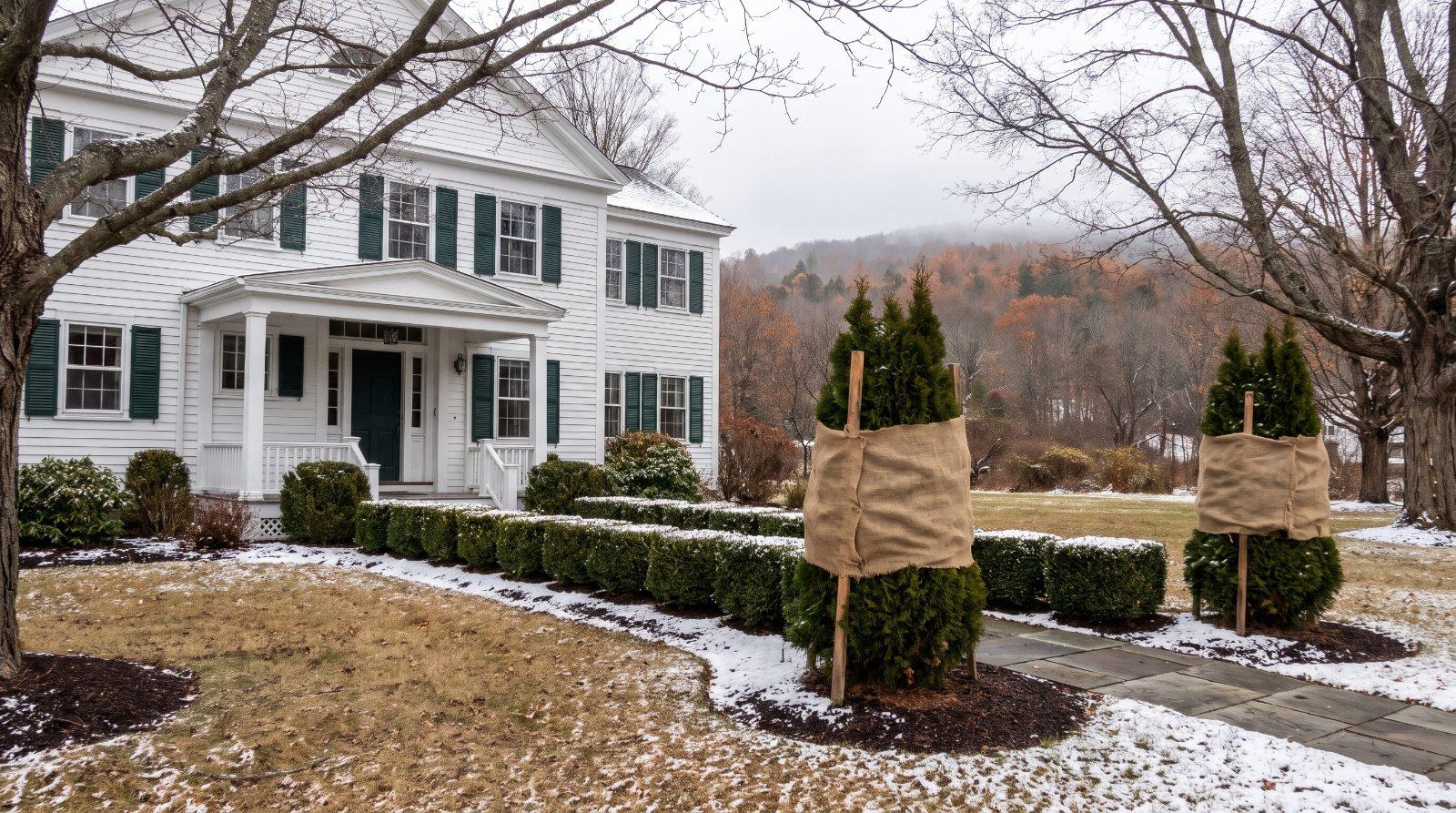
For evergreens that burn every year, a windbreak makes a real difference. Burlap is the go-to material because it breathes and lets moisture through.
The best approach for most yards is a burlap screen rather than a tight wrap:
- Drive three or four wooden stakes into the ground around the shrub, a few inches away from the branches, before the soil freezes.
- Staple burlap to the stakes on the windward and sunny sides, or all the way around for very exposed plants.
- Leave the top open so air can circulate and light can reach the plant.
If you do wrap a shrub directly, keep the burlap loose. Never use plastic, which traps heat and moisture and can cook the foliage on a sunny winter day.
Step 4: Protect Upright Shrubs From Snow Load
Multi-stemmed, upright shrubs like arborvitae and some junipers are the ones that split open under heavy snow. You can help them in two ways.
Tie them up. Loop soft jute twine around the shrub in a spiral from bottom to top, snug enough to hold the stems together but not so tight that it cuts into the bark. Remove it in spring.
Shelter plants under rooflines. Shrubs below a roof edge take a beating when snow and ice slide off. A simple A-frame of wood or a plywood tent over small shrubs can deflect the load.
After a storm, gently brush snow off branches with a broom, sweeping upward. Leave ice alone. Trying to knock ice off usually breaks more branches than the ice would.
Step 5: Keep Salt Away From Beds
Salt is one of the most overlooked causes of shrub decline along roads and driveways in Westfield and the surrounding towns.
- Shovel first, then use as little de-icer as you need, only on icy spots.
- Consider a de-icer that's labeled as gentler on plants for walkways next to beds.
- Don't pile salty snow from the driveway onto your shrub beds. Choose a snow storage spot on the lawn or away from plantings.
- For shrubs right along the road, a burlap screen on the street side helps block plow spray.
In spring, a few deep waterings help flush salt out of the root zone before new growth starts.
Step 6: Hold Off on Heavy Pruning
It's tempting to cut everything back during fall cleanup, but heavy pruning in late fall can encourage tender new growth that won't harden off before the cold, and it leaves fresh cuts exposed all winter.
In fall, limit pruning to:
- Dead, diseased or broken branches
- Branches rubbing against the house or each other
- Limbs likely to catch snow and snap
Save shaping and structural pruning for late winter or early spring, before new growth begins. Spring-flowering shrubs like lilac and forsythia are best trimmed right after they bloom. Our tree and shrub care team handles seasonal pruning and shaping at the right time for each plant.
Step 7: Finish Your Fall Cleanup
Wet leaves matted around the base of shrubs hold moisture against the stems and give mice and voles a place to hide while they chew bark. Rake leaves out of beds, clear debris, and cut back spent perennials around your shrubs before the first lasting snow.
If the leaves are piling up faster than you can keep up, a seasonal cleanup clears beds and lawns so everything goes into winter clean.
A Quick Winter Shrub Protection Checklist
Before the ground freezes, run through this list:
- Water evergreens deeply during dry spells
- Add 2 to 3 inches of mulch, kept off the stems
- Set burlap screens around exposed evergreens
- Tie up tall, upright shrubs with soft twine
- Plan a snow storage spot away from beds
- Prune only dead, damaged or rubbing branches
- Clear leaves and debris from around shrubs
What to Check in Spring
Once the snow melts, walk your beds and look for broken stems, brown foliage and bark chewed near the ground. Many browned evergreens recover, so scratch a twig with your fingernail before cutting: green underneath means it's alive. Remove burlap and twine as soon as the worst of the cold has passed, and prune out anything that's truly dead.
Get Help Getting Your Shrubs Ready for Winter
Trimming Edge is a locally owned, family-operated lawn care and landscaping company based in Westfield, serving homes and businesses in Westfield, Huntington, Montgomery and Russell. Whether you need shrubs pruned, beds mulched, leaves cleared or storm-damaged branches cleaned up, our team can help your landscape come through winter in good shape.
Call us at (413) 551-9653 or request a free estimate online today.
Keep Reading
More from the Blog

Lawn Care: Tips & Guides
Lawn Edging vs. Lawn Trimming: What’s the Difference?
August 6, 2026
Read More